Context 主要在异步场景下实现并发协调以及对 goroutine 的生命周期控制,同时间距一定的数据存储能力。

一、核心数据结构

1.1 Context 接口

1
2
3
4
5
6
type Context interface {
    Deadline() (deadline time.Time, ok bool)
    Done() <-chan struct{}
    Err() error
    Value(key any) any
}

关注点:Done()返回<-chan struct{},利用了 channel 关闭时的广播机制(所有监听者同时收到零值),非常适合 1 对 N 的通知场景。

思考:

  • 为什么是 struct{}?因为空结构体不占内存。为什么是只读?防止使用者由外部向 channel 发送数据破坏逻辑。

1.2 emptyCtx - 树的根节点

1
2
3
4
5
6
type emptyCtx struct{}

func (emptyCtx) Deadline() (deadline time.Time, ok bool) { return }
func (emptyCtx) Done() <-chan struct{} { return nil }
func (emptyCtx) Err() error { return nil }
func (emptyCtx) Value(key any) any { return nil }

该结构体是 BackgroundTODO 的底层实现。

所有方法返回 nil 或 false。它永远无法被 Cancel,是所有 Context Tree 的根节点。

关注点:Done() 返回 nil,意味着读取 nil channel 会永久阻塞,因此 emptyCtx 永远无法被 cancel。

1.3 cancelCtx - 级联取消的核心

1
2
3
4
5
6
7
8
type cancelCtx struct {
    Context                   // Embedding: 继承父节点的 Value/Deadline
    mu       sync.Mutex       // 保护 children 和 err/cause
    done     atomic.Value     // 懒加载 channel,原子操作优化读性能
    children map[canceler]struct{} // Set 结构,存储子节点引用
    err      atomic.Value     // 记录取消原因
    cause    error            // 详细的取消原因 (Go 1.20+)
}

该结构体是理解 Context 级联取消的关键。

关注点:

  • children:类型是 map[canceler]struct{}
    • Key 是 canceler 接口(实现了 cancel 方法的 context),Value 是空结构体。这是为了建立父子树形关系,方便父节点取消时通知所有子节点。
    • 这是一个 Set。父节点只需要持有子节点的指针以便调用其 cancel 方法,不需要存任何值。
  • done:使用了 atomic.Value
  • 这是为了优化 Done() 方法的性能。因为 Done() 会被高频调用(在 for 循环中),原子操作比互斥锁 (mu.Lock) 快得多
  • Done() 方法使用了 Double-Check locking 机制来实现懒加载,只有第一次调用时才创建 channel。

1.4 timerCtx-时间控制

1
2
3
4
5
type timerCtx struct {
    cancelCtx                 // 继承 cancelCtx 的所有能力(级联取消)
    timer *time.Timer         // 内部维护一个定时器
    deadline time.Time
}

关注点timerCtx 只是对 cancelCtx 的封装。它通过 time.AfterFunc 在时间到达时调用 cancel 方法。

1.5 valueCtx-值传递

 1
 2
 3
 4
 5
 6
 7
 8
 9
10
11
12
13
14
15
16
17
18
19
20
21
22
23
24
25
26
type valueCtx struct {
    Context
    key, val any
}

func value(c Context, key any) any {
    for {
        switch ctx := c.(type) {
        case *valueCtx:
            if key == ctx.key {
                return ctx.val
            }
            c = ctx.Context // 没找到,向父节点回溯
        case *cancelCtx:
            if key == &cancelCtxKey { return c } // 特殊后门,用于 propagateCancel 找父节点
            c = ctx.Context // cancelCtx 不存值,继续向上找
        case *timerCtx:
            if key == &cancelCtxKey { return &ctx.cancelCtx }
            c = ctx.Context
        case backgroundCtx, todoCtx:
            return nil // 根节点,查找结束
        default:
            return c.Value(key)
        }
    }
}

关注点: 这是一个链表,每次 WithValue 都在外层包一个新的 valueCtx。一个 valueCtx 实例只能存一个 kv 对,因此 n 个 kv 对会嵌套 n 个 valueCtx,造成空间浪费 链式查找:基于 k 查找时是一个 O(N) 的过程(N=层级深度)。 不支持基于 k 的去重,相同 k 可能重复存在,并基于起点的不同,返回不同的 v. 由此得知,valueContext 的定位类似于请求头,只适合存放少量作用域较大的全局 meta 数据.

二、Context 是如何把取消信号传递给子节点的?

问题:父子节点如何建立联系?取消信号如何传播?

业务代码使用方式:

1
2
ctx, cancel := context.WithCancel(context.Background())
defer cancel()

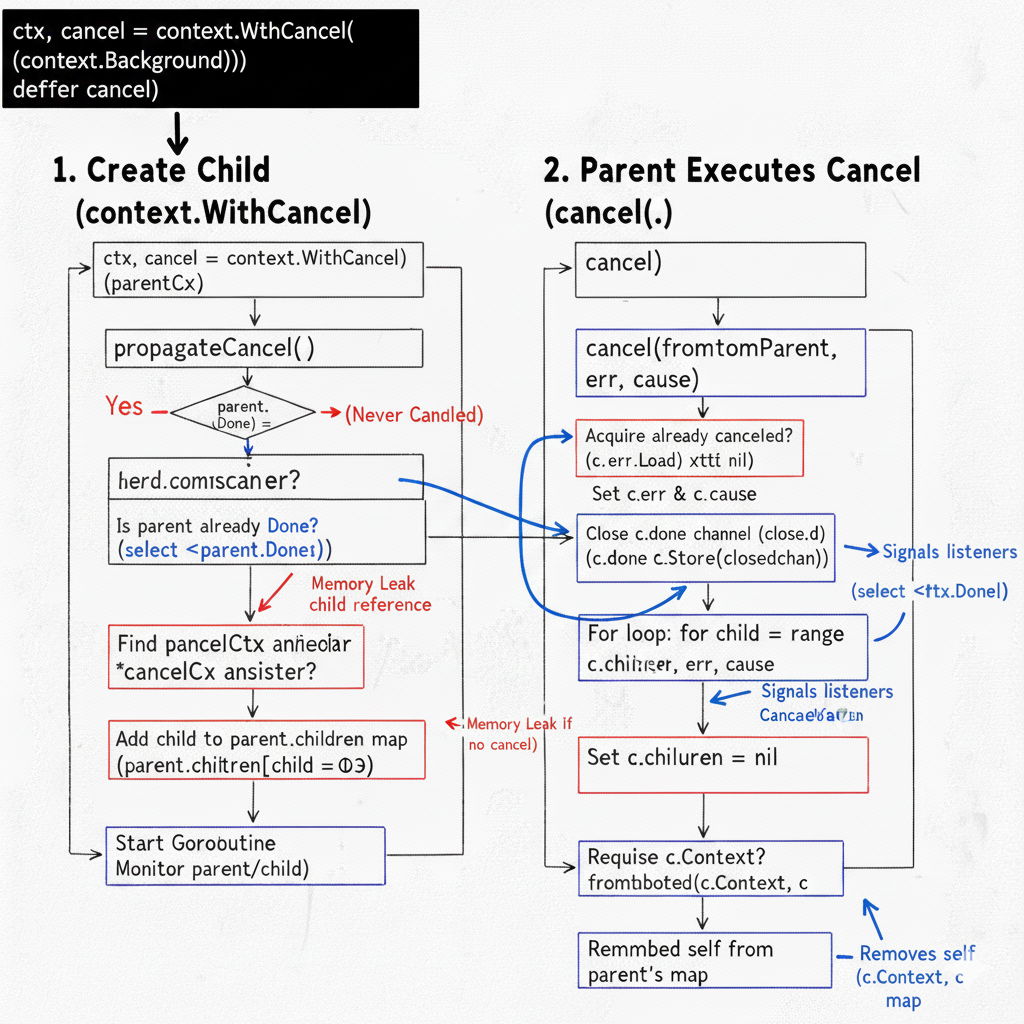
这两行代码主要有两个行为:创建 child ctx 和 执行 cancel

调用流程图

2.1 创建 Child

当调用 context.WithCancel 时,源码内部核心逻辑在 propagateCancel 方法中

 1
 2
 3
 4
 5
 6
 7
 8
 9
10
11
12
13
14
15
16
17
18
19
20
21
22
23
24
25
26
27
28
29
30
31
32
33
34
35
36
37
38
39
40
41
42
43
44
45
46
47
48
49
50
51
52
53
54
55
56
57
// propagateCancel arranges for child to be canceled when parent is.
// It sets the parent context of cancelCtx.
func (c *cancelCtx) propagateCancel(parent Context, child canceler) {
	c.Context = parent

	done := parent.Done()
	if done == nil {
		return // parent is never canceled
	}

	select {
	case <-done:
		// parent is already canceled
		child.cancel(false, parent.Err(), Cause(parent))
		return
	default:
	}

	if p, ok := parentCancelCtx(parent); ok {
		// parent is a *cancelCtx, or derives from one.
		p.mu.Lock()
		if err := p.err.Load(); err != nil {
			// parent has already been canceled
			child.cancel(false, err.(error), p.cause)
		} else {
			if p.children == nil {
				p.children = make(map[canceler]struct{})
			}
			p.children[child] = struct{}{}
		}
		p.mu.Unlock()
		return
	}

	if a, ok := parent.(afterFuncer); ok {
		// parent implements an AfterFunc method.
		c.mu.Lock()
		stop := a.AfterFunc(func() {
			child.cancel(false, parent.Err(), Cause(parent))
		})
		c.Context = stopCtx{
			Context: parent,
			stop:    stop,
		}
		c.mu.Unlock()
		return
	}

	goroutines.Add(1)
	go func() {
		select {
		case <-parent.Done():
			child.cancel(false, parent.Err(), Cause(parent))
		case <-child.Done():
		}
	}()
}

源码流程解析:

  1. 快速检查:如果 parent.Done()nil(如 Background),说明父节点永不取消,子节点无需挂载,直接返回。
  2. 父节点状态检查:如果父节点已经 Done(channel 已关闭),子节点通过 select case <-done 立即感知并自我取消。
  3. 寻找可挂载的祖先 (parentCancelCtx)

◦ Go 尝试通过 parent.Value(&cancelCtxKey) 找到最近的、内部实现的 *cancelCtx。 ◦ 这是为了跳过那些只包含值但不具备取消能力的节点(如 valueCtx),直接把子节点挂到最近的“控制节点”上,优化树结构深度。

  1. 加入 Map (Link)

◦ 如果找到祖先 p,加锁 p.mu.Lock(),将当前子节点加入父节点的 map 中:p.children[child] = struct{}{}

目的:让父节点持有子节点的引用,以便将来通知它。

◦ 这就是为什么如果不 cancel 子节点,且父节点存活较长,会导致子节点无法 GC(内存泄漏)的原因。

  1. 外部 Context 兼容

◦ 如果父 Context 是用户自定义的(找不到 *cancelCtx),Go 会启动一个独立的 Goroutine 同时监听父子 channel:case <-parent.Done(): child.cancel(...)

2.2 Parent 执行 Cancel

cancelFunc 被调用时,执行核心的 cancel 方法:

 1
 2
 3
 4
 5
 6
 7
 8
 9
10
11
12
13
14
15
16
17
18
19
20
21
22
23
24
25
26
27
28
29
30
31
32
33
34
// cancel closes c.done, cancels each of c's children, and, if
// removeFromParent is true, removes c from its parent's children.
// cancel sets c.cause to cause if this is the first time c is canceled.
func (c *cancelCtx) cancel(removeFromParent bool, err, cause error) {
	if err == nil {
		panic("context: internal error: missing cancel error")
	}
	if cause == nil {
		cause = err
	}
	c.mu.Lock()
	if c.err.Load() != nil {
		c.mu.Unlock()
		return // already canceled
	}
	c.err.Store(err)
	c.cause = cause
	d, _ := c.done.Load().(chan struct{})
	if d == nil {
		c.done.Store(closedchan)
	} else {
		close(d)
	}
	for child := range c.children {
		// NOTE: acquiring the child's lock while holding parent's lock.
		child.cancel(false, err, cause)
	}
	c.children = nil
	c.mu.Unlock()

	if removeFromParent {
		removeChild(c.Context, c)
	}
}

核心源码解读 :

校验参数err 不能为空,这通常是 CanceledDeadlineExceeded

并发控制 (c.mu.Lock):确保多个 Goroutine 同时调用 cancel 时是安全的。

状态翻转 (c.err.Load):Context 的取消是单向的(从 nil 到 error),一旦取消不可逆转。如果已有值,说明已被其他协程取消,直接返回。

广播信号 (close(d)):这是通知当前层级监听者的手段。如果有监听者 select case <-ctx.Done(),它们会立即收到信号。注意,如果 channel 还没被初始化(懒加载),直接放入一个全局复用的 closedchan,极其节省资源。

级联传播 (for child := range c.children):这是通知子孙层级的手段。父节点持有所有直接子节点的引用,遍历并调用它们的 cancel。注意这里传入的 removeFromParentfalse,因为父节点已经在做清理工作了(c.children = nil),不需要子节点再回头来删自己。

断开父子关系 (removeFromParent):如果这是由用户主动调用的 cancel()(通常传入 true),需要将自己从父节点的 map 中移除,防止父节点一直引用着已经死亡的子节点,造成内存泄漏。

三、 主要业务场景与关键点分析

3.1 场景一:超时控制 (Timeout/Deadline)

源码原理WithTimeout 实际上是调用 WithDeadline。它创建了一个 timerCtx,内部持有一个 time.Timer

触发机制time.AfterFunc 会在时间到达时调用 c.cancel

关键点:即便操作在超时前完成,必须显式调用 cancel 函数

原因:如果不调用,该 Context 会一直挂在父节点的 children map 中,直到超时时间触发或父节点取消。对于长生命周期的父节点(如 Server Root Context),这会导致严重的内存泄漏(Timer 和 Context 对象均不释放)。

3.2 场景二:Goroutine 泄露保护

错误示范:启动 Goroutine 后不管不顾。 正确姿势:业务 Goroutine 必须监听 Done()

 1
 2
 3
 4
 5
 6
 7
 8
 9
10
11
// 源码示例 [19]
func Stream(ctx context.Context, out chan<- Value) error {
    for {
        // ... 业务逻辑 ...
        select {
        case <-ctx.Done(): // 必须监听!
            return ctx.Err() // 响应取消信号,退出 Goroutine
        case out <- v:
        }
    }
}

原理:父节点 cancel -> 关闭 channel -> select 收到信号 -> return。

3.3 场景三:Request-Scoped 值传递

使用建议

  1. Key 的类型:不要使用 string,应用包应定义未导出的类型(如 type key int)来避免不同包之间的 Key 冲突。
  2. 不可变性WithValue 每次返回一个新的 valueCtx,形成链表。多次 WithValue 会导致链条变长,查询效率为 O(N)。因此,不应将其作为通用缓存或传递大量参数的工具

3.4 面试高频问题总结

Q: Context 是并发安全的吗?

A: 是。源码中 cancelCtx 在修改 childrenerr 时使用了 sync.Mutex 加锁,读取 DoneErr 使用了 atomic,因此可以被多个 Goroutine 安全访问。

Q: children 字段为什么要用 map

A: 为了实现 Set 语义。Key 是子节点接口,Value 是空结构体 struct{}(不占内存)。这允许父节点高效地管理和遍历子节点,实现 O(1) 的添加和删除

四、参考

  1. golang context 源码 /usr/local/go/src/context/context.go
  2. Golang context 实现原理